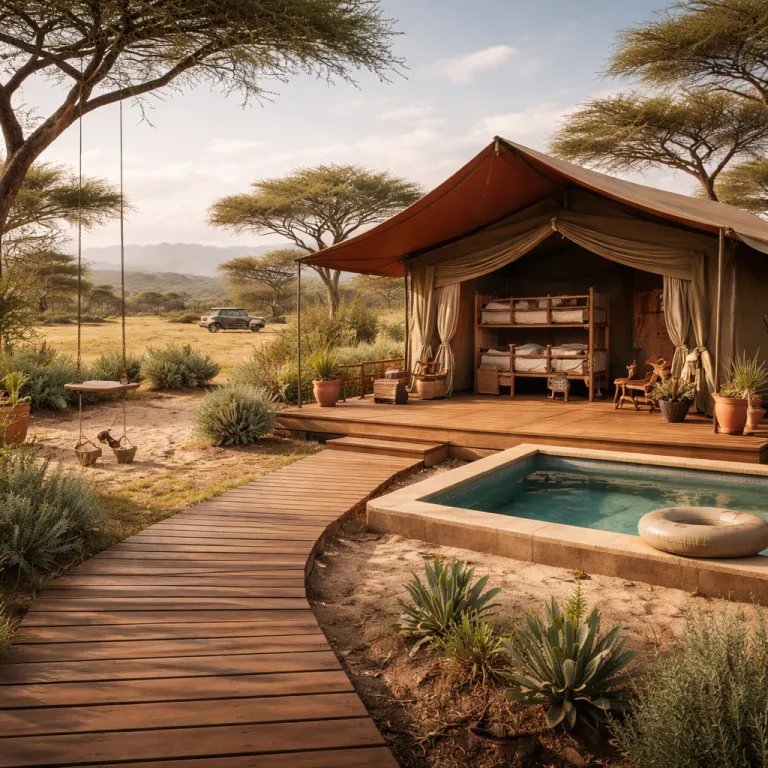
Reading child policies for a kenya luxury family safari
Planning a Kenya luxury family safari starts long before you land in Nairobi or the Maasai Mara. The real work begins on the booking page, where child policies, room categories and fine print quietly decide whether your children are truly welcome or merely tolerated. For a Kenya family trip that feels relaxed rather than apologetic, you need to read those lines the way a seasoned safari planner does, cross-checking them with current guidance from the Kenya Tourism Board and Kenya Wildlife Service.
When a luxury lodge or safari camp in the Maasai Mara or another national reserve mentions a “family room” without specifying ages, assume there may be limits for younger children. Many high-end properties in popular Kenya safari destinations typically apply a minimum age of around 6–12 for shared game drives, especially during peak wildlife viewing periods such as June–July or August–September when vehicles are full. These age bands vary by camp and season, so treat them as practical guidance rather than fixed rules and always confirm directly with the property or your operator. The best camps for a family safari will state, in plain language, whether children under 10 can join shared drives, whether a private vehicle is compulsory, and how many days they recommend for a balanced stay.
Look closely at how a property describes its family facilities and activities in Kenya, not just the décor of the room or tent. If the website leans heavily on romantic sundowners and couples’ spa rituals, it is probably not the best base for a Maasai Mara safari with energetic children who wake before dawn. By contrast, camps that talk about flexible meal times, shorter game drives, child-friendly menus and wildlife viewing tailored to different ages are signalling that a Kenya family group will not be an afterthought during busy July–August or November–December holiday periods.
Camps that genuinely welcome children in the Masai Mara
In the Maasai Mara and the wider Mara ecosystem, only a handful of luxury properties have built their identity around the Kenya luxury family safari market. Saruni Mara, for example, runs its Adventurers’ Club, where children learn basic tracking, try simple game-viewing walks around camp and hear Maasai stories by the fire. This is not a token activity sheet; it is a structured programme that turns each day into a layered experience rather than a long wait between game drives, and Saruni’s published child policy typically welcomes children from around age 5 in camp, with guided activities adapted by age.
Cottar’s 1920s Camp goes further for a Kenya family group by offering a private family camp option, effectively giving you your own small Mara safari base with a dedicated guide and staff. That privacy matters when younger children need early dinners, noisy play and flexible bedtimes after long days in the Maasai Mara. Sirikoi, in the Laikipia region rather than the Mara National Reserve, offers a family villa that functions like a self-contained luxury residence, with space for play, a private deck for relaxed wildlife viewing and staff who understand that a family safari rhythm is different from a honeymoon schedule; their guidelines often set a minimum age of about 7–8 for certain walks.
Kicheche’s family suites in their Mara conservancy camps are another strong choice for Kenya safari travellers with children who want serious wildlife without sacrificing sleep. These suites typically offer two bedrooms under one roof, giving parents privacy while keeping children close enough for reassurance during the night. For travellers comparing conservancies with the busier national reserve, the detailed analysis in this guide to why private conservancies often beat national reserves for luxury safari is essential reading before you lock in your Kenya luxury itinerary, especially when planning a multi-generational family group.
What kids’ programmes really deliver on safari Kenya
Not every “kids’ club” on a Kenya luxury family safari is created equal, and the label can hide a wide range of quality. At Saruni Mara, the Adventurers’ Club is woven into the core safari experience, with Maasai guides teaching children how to read tracks, identify wildlife from droppings and understand why the Great Migration matters to the entire ecosystem. These sessions turn game viewing into a story that continues back in the room, as children sketch lions and list the birds they saw that day, and parents see concrete learning rather than passive entertainment.
At Cottar’s 1920s, the private family camp option allows staff to tailor each day around your children’s energy levels, alternating short game drives with pool time, simple archery lessons and gentle walks near camp. Sirikoi’s team often arranges hands-on conservation activities, such as visiting nearby projects or learning how rangers protect wildlife in the adjacent national park, which deepens the Kenya family connection to place. Kicheche’s guides excel at adjusting the pace of Mara safari drives, turning a standard three-hour outing into a series of shorter loops with snack breaks, bird-spotting challenges and simple photography tips for older children, often capping drive lengths for under-10s at around two hours at a stretch.
For parents, the best time to judge a programme is not on a glossy brochure but in how staff talk about children during your pre-arrival calls. Ask whether activities change between January–February, when grass is lush and wildlife viewing can be trickier, and the drier June–July or August–September periods when animals cluster around water. Serious operators will explain how they adapt each family safari day to the season, while also being honest if your children are still too young for certain walks or longer game drives during busy November–December holiday weeks.
Families planning ahead should also track new openings and refurbishments, because fresh properties often launch with strong children’s programming to stand out in the Kenya luxury market. A practical way to stay ahead is to follow curated round-ups such as the report on Kenya properties worth booking before they vanish from availability, then cross-check each new camp’s child policy and room range. Matching a new camp’s enthusiasm with a proven family safari track record is where the best long-term experiences are usually found, especially when you are planning repeat trips as your children grow.
Private vehicles, pacing and the Mara plus coast equation
The single biggest unlock for a Kenya luxury family safari with younger children is often a private vehicle and guide. Shared game drives in Kenya safari areas usually run to fixed schedules, with long hours that suit photographers but exhaust children by the second or third day. When you pay the surcharge for a private vehicle, you control departure times, snack breaks and when to turn a game drive into a gentle cruise with quiet wildlife viewing rather than a checklist hunt. Exact supplements vary widely by camp and season, but many Mara conservancy lodges charge in the region of US$350–700 per day per vehicle, so treat any price examples as indicative and confirm current costs with your chosen operator.
For under-10s, that flexibility is priceless, especially in the Maasai Mara during the Great Migration when sightings can mean traffic jams of vehicles. A private guide can choose quieter loops in the Mara conservancies, reading the grass and tracks to find wildlife without the crowding that sometimes affects the central national reserve. Many families report that three or four days of tailored game drives with one guide feel richer than a longer stay on a rigid schedule, because the guide learns each child’s interests and builds each day around them, from favourite animals to preferred snack stops.
Most Kenya family itineraries pair a Mara safari with time on the Kenya coast, and that balance works beautifully when you pace it correctly. Aim for at least four nights in the Maasai Mara or another national park, followed by five or six nights at a beach property such as Hemingways Watamu, Alfajiri Villas or Manda Bay, where children can decompress after intense wildlife days. These beach stays are not an afterthought; they are the soft landing that turns a packed family safari into a rounded Kenya luxury journey, with mornings on the sand, afternoons by the pool and evenings swapping wildlife stories over dinner.
When comparing properties, look at how clearly each hotel or villa explains its room categories, bed configurations and age policies for children sharing with parents. A transparent range of family room options, from interconnecting suites to two-bedroom villas, usually signals a team that understands multi-generational travel. If the website is vague, ask directly how many children can share, whether extra beds are proper mattresses and how they handle early dinners during busy November–December or August–September periods when kitchens are stretched.
When to travel, when to wait and who to book with
Timing a Kenya luxury family safari is as much about your children’s ages as it is about the calendar. For many families, the best time for a first Kenya safari is when the youngest child is at least six, old enough to follow basic safety rules and stay engaged during shorter game drives. If your children are younger, consider delaying the Maasai Mara and starting with gentler national park or conservancy stays where wildlife viewing is still excellent but logistics are simpler and drive times can be kept very short.
Seasonally, the classic advice holds that the best time for wildlife viewing in much of Kenya is the long dry period from roughly June–July through October, when vegetation is thinner and animals concentrate near water. That window includes the peak of the Great Migration in the Maasai Mara, when vast herds move through the Mara ecosystem and Kenya safari vehicles line the riverbanks for crossings. Shoulder periods such as January–February and late November–December can also work well for a family safari, with fewer vehicles and softer light, though some areas may have thicker grass that makes game viewing more of a patient art.
Choosing the right partner is non-negotiable for a Kenya family trip at this level. Specialist operators such as Jeci Safaris, Ker & Downey and Oluokos have built their reputations on tailoring luxury family safaris in Kenya, working closely with local lodges, conservancies and cultural groups to match each family’s pace. As one widely used planning resource puts it, “What is the best time for a family safari in Kenya? June to October during the dry season. Are safaris safe for children? Yes, with proper precautions and reputable operators. What wildlife can families expect to see? The Big Five: lion, leopard, elephant, buffalo, and rhino.” These summaries are broad guidelines rather than guarantees, so always review current Kenya Wildlife Service and Kenya Tourism Board updates for the latest conditions.
For some families, especially those with toddlers or very active under-fives, the honest answer is that waiting two more years will yield a far better Kenya luxury experience. In the meantime, you can still sample Kenya’s hospitality through shorter trips to Nairobi or lakeside cities such as Kisumu, using resources like this elegant guide to premium hotels in Kisumu to understand the country’s hotel range. When your children are ready, you will arrive in the Maasai Mara or another national reserve with a clearer sense of what you value, and the Kenya safari will feel like a natural next step rather than a rushed experiment.
FAQ about planning a kenya luxury family safari
How many days should a family spend on safari Kenya
For most families, six to eight days on safari in Kenya, split between one Mara area and one other national park or conservancy, offers the right balance of excitement and rest. Less than five days can feel rushed, especially with children adjusting to early game drives. Longer trips work best when you build in rest days with no activities beyond relaxed wildlife viewing from camp, or quiet time at the pool or library.
Is a kenya safari safe for young children
A Kenya safari can be safe for young children when you choose reputable operators, follow camp rules and book properties that are genuinely set up for families. Fenced or partially fenced camps, family rooms close to main areas and private vehicles all reduce risk and stress. Always follow guide instructions during game drives and walks, and keep children within arm’s reach in unfenced areas, especially at night or near water.
What is the best time of year for a kenya family safari
The best time for a Kenya family safari is usually the long dry season from roughly June–July through October, when wildlife viewing is easier and rain is less likely to disrupt game drives. Families who prefer fewer vehicles may enjoy January–February or late November–December, accepting slightly thicker vegetation in exchange for quieter sightings. School holiday patterns and your children’s ages should ultimately guide the final choice.
Which areas of Kenya work best for a first family safari
The Maasai Mara and its surrounding conservancies are excellent for a first family safari because wildlife densities are high and game viewing is rewarding even on shorter drives. Laikipia and Samburu National Reserve also work well, with varied landscapes and strong cultural experiences with Maasai and Samburu communities. Many families then add a few beach days at the coast to unwind after intense Kenya safari mornings and long travel days.
Do we really need a private vehicle for our kenya luxury family safari
For families with children under 12, a private vehicle is strongly recommended because it allows you to set your own schedule and adapt each game drive to your children’s energy. You can return to camp earlier, focus on gentle wildlife viewing or spend a whole day following one herd without worrying about other guests. The extra cost often transforms the Kenya luxury experience from stressful to deeply enjoyable for everyone, particularly during the busy Great Migration months.
References
Kenya Tourism Board; Kenya Wildlife Service; Maasai Mara Wildlife Conservancies Association.